Moissanite polki has moved from a niche to a staple on many jewellery counters. If you are deciding whether to stock it, here is what you need to know.
What moissanite is
Moissanite is silicon carbide, grown in a lab. At about 9.25 on the Mohs hardness scale it is second only to diamond, so it resists scratches and keeps its shine for years.
What makes it polki
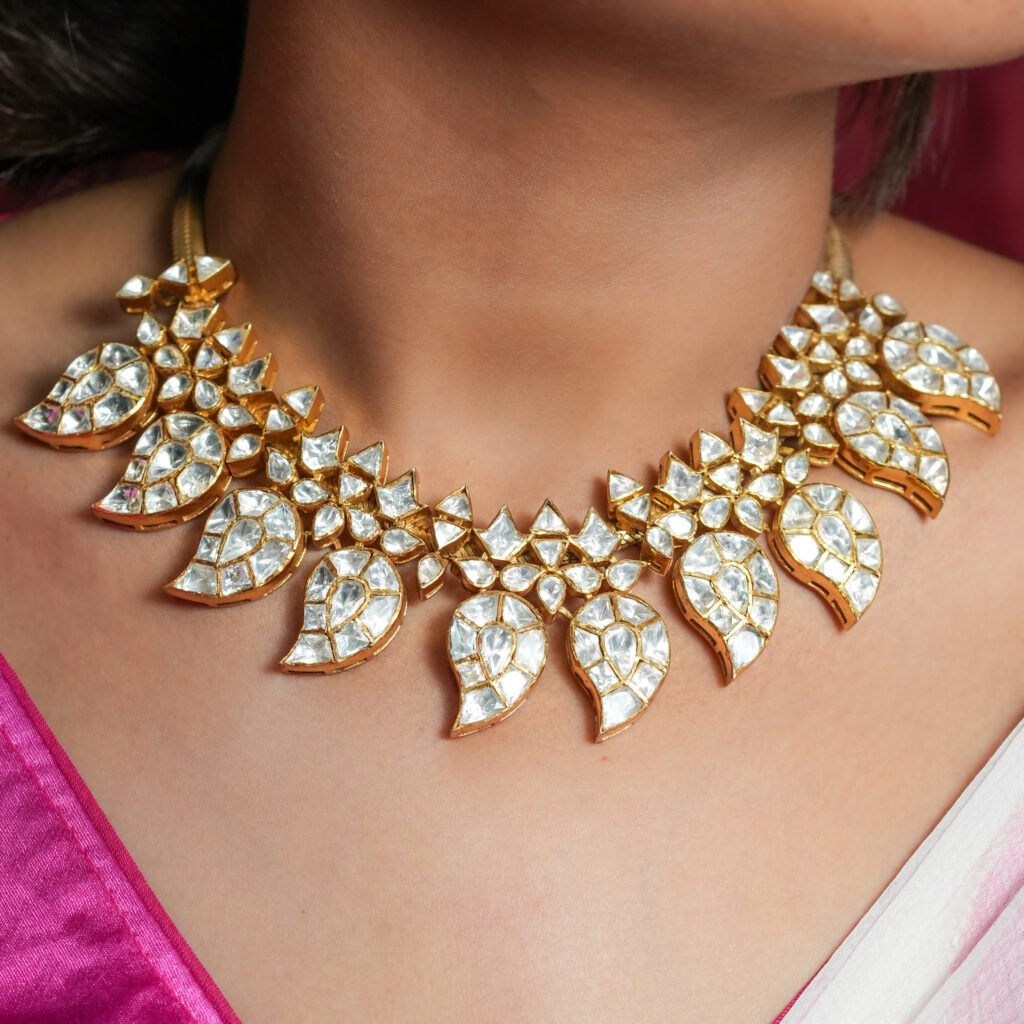
Polki traditionally means uncut diamonds with a flat, soft glow. Moissanite polki is moissanite cut flat in the same style and set the traditional way, so a piece has the look of diamond polki at a far lower price.
Why stores stock it
- Bridal looks at a reachable price: customers who cannot stretch to diamond polki can still wear the style.
- It lasts: the hardness means fewer complaints about dull or scratched stones.
- It photographs well, which matters when most buyers see a piece online first.
What to check before you buy
- The metal: 925 sterling silver, with the purity guaranteed.
- The plating: ask the thickness and the finish options.
- The setting: stones should sit level and firm, with clean edges.
- The description: it should be invoiced as moissanite, not as diamond.
How to sell it honestly
Tell the customer it is moissanite. Buyers respect a clear answer, and the price makes sense once they know. The trouble only starts when a piece is sold as something it is not.
We make moissanite polki necklaces, earrings, bangles and pendant sets in 925 silver in our Jaipur workshop. Wholesale: WhatsApp 088248 91530 for a live video call. Minimum order 500 g.
